
St. Louis County Wanted Fugitives
Start with the Sheriff's Warrant Division page. From there you can open separate felony and misdemeanor warrant PDFs that come straight from the Sixth Judicial District Court. The court issues the warrants. The Sheriff's office carries them out. The county refreshes both lists every night at 9:00 p.m., though it warns that court action can take time to appear and that accuracy is not guaranteed.
There is no photo-based Most Wanted gallery here. The warrant documents show text fields, not booking photographs. That gap matters more than it sounds. Someone can have an active warrant while never appearing on a current booking roster, and someone sitting in county custody may be held on an entirely different matter. A listing only tells you a warrant was on file at the time shown.
St. Louis County Warrant Fields
Each PDF uses a consistent set of fields, which helps you tell a court-issued warrant apart from a booking record. Details can shift between versions. Matching a common name takes real care. The issue date and warrant type carry the most weight, but neither will reveal whether deputies have since executed the warrant.
| Listing field | Meaning |
|---|---|
| Name, age, city, and state | Identity clues that need careful confirmation for similar names. |
| Charge and offense level | The charge or court basis shown in the warrant record. |
| Issue date | When the court record was entered, not an arrest date. |
| Bail amount | A warrant-related field, not a final sentence or disposition. |
| Warrant type | Classifies the court order and helps route the check. |
Two live PDFs from the sheriff's office carry the county's warrant lists. One covers active felony warrants. The other lists active misdemeanor warrants. Before you trust any single entry, look at the date and time stamped on the document. The county itself warns that the data can lag. A name missing from the list is no guarantee that no warrant exists.
Read St. Louis County Wanted Lists
Read both lists in order. Don't treat either one as the whole picture. Start at the Warrant Division landing page. From there, match spellings and identifying fields inside the correct PDF. This is a public record snapshot, not an identity-verification service. The Sheriff's own notice concedes the data may lag or run incomplete, since court action can land between the nightly refreshes.
- Open the official Warrant Division page and select both warrant categories.
- Check the document date, exact name spelling, age, city, charge, issue date, bail, and warrant type.
- Keep the warrant record separate from a current county-roster search and a later court disposition.
- For a possible personal case, contact the court, attorney, or law enforcement rather than relying on the PDF alone.
An arrest on a warrant can later create a booking record. The St. Louis County custody-record lookup walks through the current roster, the 48-hour release roster, and the later court record without confusing a warrant with an arrest.
Check St. Louis County Warrants
The official path is simple to describe. Run from the felony and misdemeanor PDFs to court administration when a status needs confirming or resolving. Warrants get quashed, modified, added, or delayed in the exchange between court and Sheriff. Similar names add another reason to avoid quick conclusions from one search. And no public county tool turns this check into a mugshot search.
| Warrant type | Safe next step |
|---|---|
| Felony active warrant | Review the official felony PDF, then contact the appropriate official court or attorney for a status question. |
| Misdemeanor active warrant | Review the official misdemeanor PDF and use court administration for confirmation. |
| Bench or court-process issue | Ask the court administration office about the applicable process, without assuming the public list is current. |
| Possible identity mismatch | Use official court or law-enforcement channels, not a name-only conclusion. |
Local check-in options are limited but real. Duluth Courthouse takes walk-ins on Tuesday mornings at 8:30 a.m. in Room 133. Hibbing Court Administration answers at 218-274-6007 option 4, and Virginia Court Administration at 218-305-7021 option 4. These are routing details rather than legal advice. Confirm them with the court before you travel or act.
Note: A court status question is not the same as reporting a tip, and an official answer may depend on the exact case, person, and current court record.
St. Louis County Warrant Safety
Safety comes first with any wanted-persons list. The Sheriff's Office runs an anonymous tip form where the public can share what they know about a fugitive. That is its only purpose. It will not search records for you or settle a case, so use it strictly for reporting. Never approach or corner someone who appears on a warrant roster, and do not rally neighbors to do so either. Leave that work to trained officers.
Official Warrant Tip Route
St. Louis County Sheriff Warrant Division
Pass information meant for law enforcement through the county's anonymous online warrant tip form.
In an emergency or immediate danger, call emergency services instead of filling out a form.
The Sheriff's social-media directory and its Facebook page sometimes carry selected public-safety notices. Neither one is a complete warrant database. The daily PDFs stay the official list. Check any social post against the live court-supplied files before believing it. The linked Warrant Division page is the source the official county interface points to.
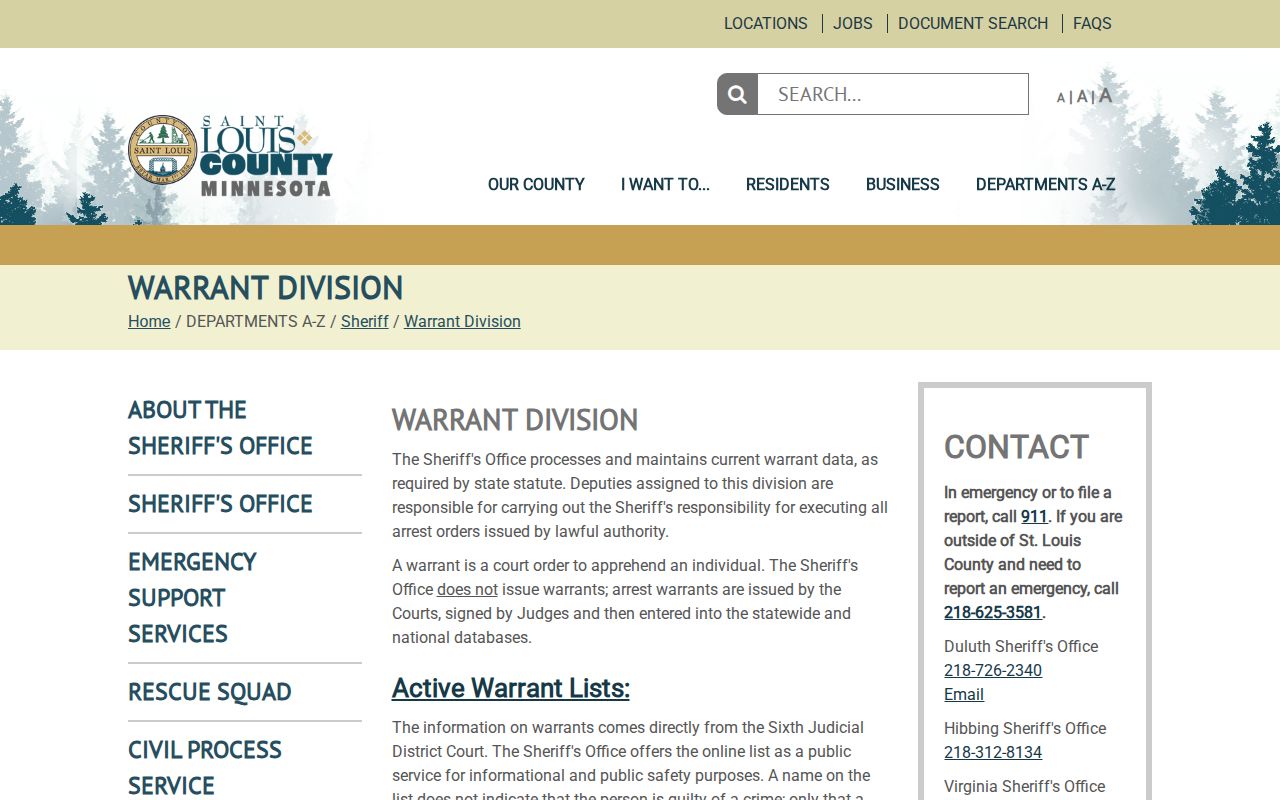
Rather than hosting a booking-photo collection, the county sends visitors to the separately updated felony and misdemeanor warrant records.
St. Louis County Warrant Outcomes
Think of a warrant, a booking, and a court case as three separate events. The warrant comes first, sometimes long before any arrest. Once someone is arrested, they might sit in the county jail, show up on the roster, get released, move to another facility, or vanish from public view. What the court eventually decides belongs to its own stage of the story, whether dismissal, a plea, or some other outcome. Collapsing all of that into the language of the original warrant gets the record wrong.
Minnesota Court Records Online is the official route for case details. One catch matters here. Its name search will not show pending criminal cases until a conviction. So a search by defendant name may come back empty while a case is very much alive. Try a case number or citation, ask an attorney, or contact court administration. A courthouse terminal can help too.
The St. Louis County jail also holds people for outside authorities, including the U.S. Marshals and fugitives wanted in other places. A roster entry there is still just county custody, not a state sentence. When custody becomes federal, immigration-related, or supervised by Minnesota DOC, check the matching official source, whether BOP, ICE, or DOC, for that custody system.
St. Louis County Wanted Versus Booked
Three documents, three meanings. A wanted PDF shows an active court-issued warrant as of the date printed on it. The current county roster shows someone actually booked into the jail. The 48-hour release roster shows a recent departure. Keeping the three straight prevents the most common mistake, reading a warrant listing as current custody or treating a release as the end of the matter.
The Sheriff's jail system serves municipal agencies across St. Louis County and also holds people for the U.S. Marshals Service or other jurisdictions. None of that changes what a warrant document means. Use the PDF for court-issued status, the roster for a county booking, and the right state, federal, or immigration locator only when that separate system applies. Every search should carry its own source date and jurisdiction.
Timing matters as much as terminology. County warrant lists refresh nightly, while the booking roster updates hourly, and neither schedule promises instant results. A release, transfer, or court correction can happen the day after you download a PDF. Recheck the issuing office before trusting an older listing. Always read the live source's own date stamp, and let the court, not a social post or third-party page, settle whether a warrant was addressed.
When checking a person's status, start with the document date and all its fields, never a copied name from a feed. The Sixth Judicial District court route handles confirmation. Someone who needs to respond to a warrant should talk to an attorney, court administration, or law enforcement. The anonymous tip form plays a different role entirely, so don't use it for personal legal questions. Note: keep a written record of the source URL, the date viewed, and the exact contact used for any follow-up.
Warrant data has no automatic tie to booking photographs. The felony and misdemeanor PDFs carry no photos at all. An official arrest release may include a story-specific image on occasion, but that stays separate from court-issued warrant data. The Sheriff Records process and the county booking system handle different documents again. Keeping these lines clean cuts down on mistaken identity and overstated claims about what the public record actually says.